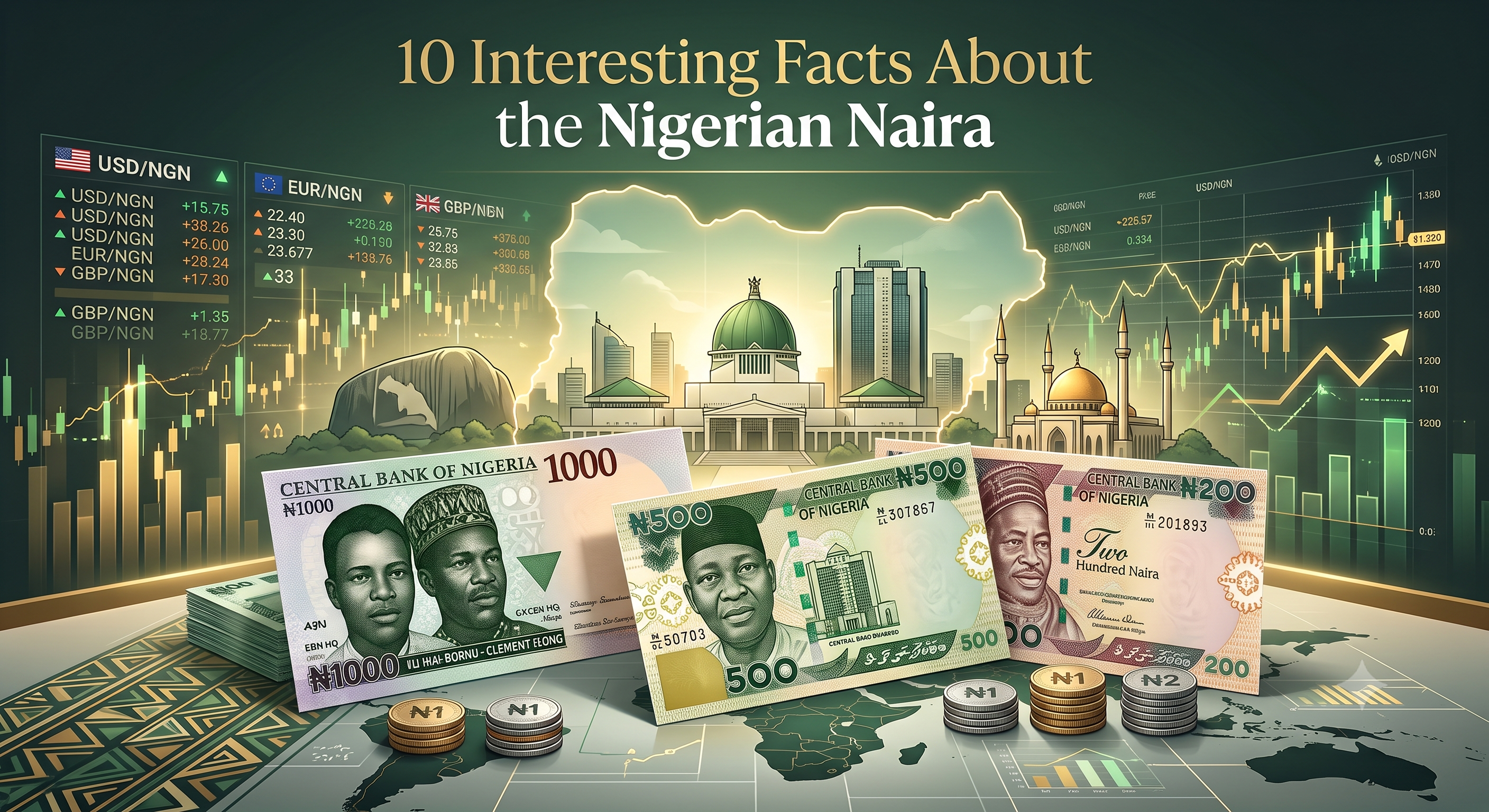
# 10 Interesting Facts About the Nigerian Naira
The Nigerian naira (₦) is one of Africa's most recognized currencies and serves as the official legal tender of Nigeria, Africa's largest economy by population. While millions of Nigerians use the naira every day, many people know surprisingly little about its history, unique features, and role in both local and global finance.
From replacing the Nigerian pound in 1973 to becoming one of the most discussed currencies in Africa due to exchange rate movements, the naira has a fascinating story.
Whether you're a student, traveler, investor, business owner, or simply curious about Nigeria's financial system, here are ten interesting facts about the Nigerian naira you probably didn't know.
If you're looking for today's exchange rates, you can always check the latest **[Black Market Rate](https://abokidollar.com/black-market-rate)**, compare it with the **[CBN Exchange Rate](https://abokidollar.com/cbn-exchange-rate)**, or convert currencies instantly using the **[Currency Converter](https://abokidollar.com/currency-converter)** on Aboki Dollar.
---
## Quick Facts About the Nigerian Naira
| Feature | Details |
|---------|---------|
| Currency Name | Nigerian Naira |
| Currency Code | NGN |
| Currency Symbol | ₦ |
| Introduced | January 1, 1973 |
| Issued By | Central Bank of Nigeria |
| Subunit | Kobo (100 Kobo = ₦1) |
---
## 1. The Naira Replaced the Nigerian Pound
Before the naira existed, Nigeria used the Nigerian Pound, which followed the British monetary system.
On **January 1, 1973**, Nigeria officially switched to the naira and kobo as part of a decimal currency system. This change simplified financial transactions and reflected Nigeria's growing economic independence after gaining independence from Britain.
Today, the naira remains one of the most traded currencies in West Africa.
---
## 2. The ₦ Symbol Is Unique to Nigeria
The naira symbol (₦) was created using the capital letter **N** with two horizontal strokes.
It joins other globally recognized currency symbols such as:
- Dollar ($)
- Pound (£)
- Euro (€)
- Yen (¥)
The symbol is now widely recognized in banking software, payment platforms, accounting systems, and financial reports worldwide.
---
## 3. One Naira Equals 100 Kobo
Like many global currencies, the naira has a smaller denomination called the **kobo**.
- ₦1 = 100 Kobo
Although kobo coins are still legal tender, inflation has significantly reduced their purchasing power. As a result, most everyday transactions are rounded to whole naira amounts, and kobo coins are rarely seen in circulation.
---
## 4. Only the Central Bank of Nigeria Can Issue the Naira
The **[Central Bank of Nigeria](https://www.cbn.gov.ng/)** (CBN) is solely responsible for printing, issuing, regulating, and managing Nigeria's currency.
Its responsibilities include:
- Printing new banknotes
- Removing damaged notes
- Managing inflation
- Regulating monetary policy
- Maintaining financial stability
- Managing Nigeria's official foreign exchange market
The CBN also periodically redesigns banknotes to improve security and reduce counterfeiting.
---
## 5. Nigeria Operates Multiple Foreign Exchange Markets
One of the most interesting aspects of Nigeria's financial system is that exchange rates can differ depending on the market.
The most commonly referenced markets include:
- Official CBN market
- Bureau de Change market
- Parallel (black) market
Supply, demand, government policies, and foreign exchange liquidity often cause rates to vary between these markets.
For daily updates and market analysis, visit **[Bureau De Change News](https://abokidollar.com/bureau-de-change-news)**.
---
## 6. The Naira Has Undergone Several Redesigns
Since 1973, Nigerian banknotes have changed several times.
Reasons for redesigns include:
- Improved security features
- Reduced counterfeiting
- Better durability
- Modern printing technology
Recent redesigns generated nationwide discussions because they affected cash circulation, banking operations, and consumer spending.
---
## 7. Every Banknote Features Prominent Nigerians
Nigeria's banknotes celebrate individuals who contributed significantly to the country's development.
Some notable personalities featured include:
- Sir Abubakar Tafawa Balewa
- Nnamdi Azikiwe
- Obafemi Awolowo
- Ahmadu Bello
- Herbert Macaulay
- Margaret Ekpo
These figures represent Nigeria's political, educational, and historical achievements.
---
## 8. The Naira's Value Changes Every Day
Unlike fixed currencies, the naira's exchange rate fluctuates daily due to several economic factors.
Some of the biggest influences include:
- Oil prices
- Foreign exchange reserves
- Inflation
- Investor confidence
- Government policies
- Demand for foreign currencies
Because exchange rates move frequently, businesses, importers, exporters, freelancers, and travelers often monitor daily market movements.
---
## 9. The Naira Plays a Major Role in Africa's Largest Economy
Nigeria has one of Africa's largest consumer markets and conducts billions of naira in transactions every day.
The currency supports industries such as:
- Agriculture
- Oil and gas
- Technology
- Manufacturing
- Entertainment
- Banking
- Telecommunications
Its performance often influences investor sentiment toward Nigeria's economy.
Publications such as **[Nairametrics](https://nairametrics.com/)** and **[BusinessDay Nigeria](https://businessday.ng/)** frequently analyze how changes in the naira affect businesses and consumers.
---
## 10. The Naira Is Increasingly Used in Digital Payments
Nigeria has become one of Africa's fastest-growing digital payment markets.
Today, millions of Nigerians use:
- Mobile banking
- Internet banking
- Fintech apps
- QR code payments
- Instant bank transfers
- Digital wallets
Although cash remains important, electronic transactions continue to grow rapidly, making the naira increasingly digital.
---
## Why Understanding the Naira Matters
The Nigerian naira affects nearly every aspect of daily life.
Understanding how it works helps you:
- Make better financial decisions
- Understand inflation
- Compare exchange rates
- Plan international transactions
- Budget for travel
- Follow Nigeria's economy more confidently
If you also track international currencies, explore **[World Currencies](https://abokidollar.com/world-currencies)** to compare exchange rates from major economies around the globe.
---
## Frequently Asked Questions
### What is the Nigerian naira?
The Nigerian naira (NGN) is the official currency of the Federal Republic of Nigeria.
### Who issues the naira?
The Central Bank of Nigeria (CBN) is responsible for issuing and regulating the naira.
### What is the symbol for the naira?
The official symbol is **₦**.
### Why does the naira exchange rate change?
Exchange rates fluctuate because of supply and demand, inflation, foreign exchange reserves, oil prices, government policies, and global economic conditions.
### Where can I check today's naira exchange rate?
You can monitor the latest official and market exchange rates on Aboki Dollar through the **Black Market Rate**, **CBN Exchange Rate**, and **Currency Converter** pages.
---
## Final Thoughts
The Nigerian naira is much more than a medium of exchange—it tells the story of Nigeria's history, economy, and financial evolution. From replacing the Nigerian pound over five decades ago to powering one of Africa's largest digital economies today, the naira continues to evolve alongside the country.
Whether you're following daily exchange rates, studying economics, running a business, or simply satisfying your curiosity, understanding the naira provides valuable insight into Nigeria's financial landscape. Staying informed through trusted sources and monitoring currency movements can help individuals and businesses make smarter financial decisions.
10 Interesting Facts About the Nigerian Naira You Probably Didn't Know
Published on